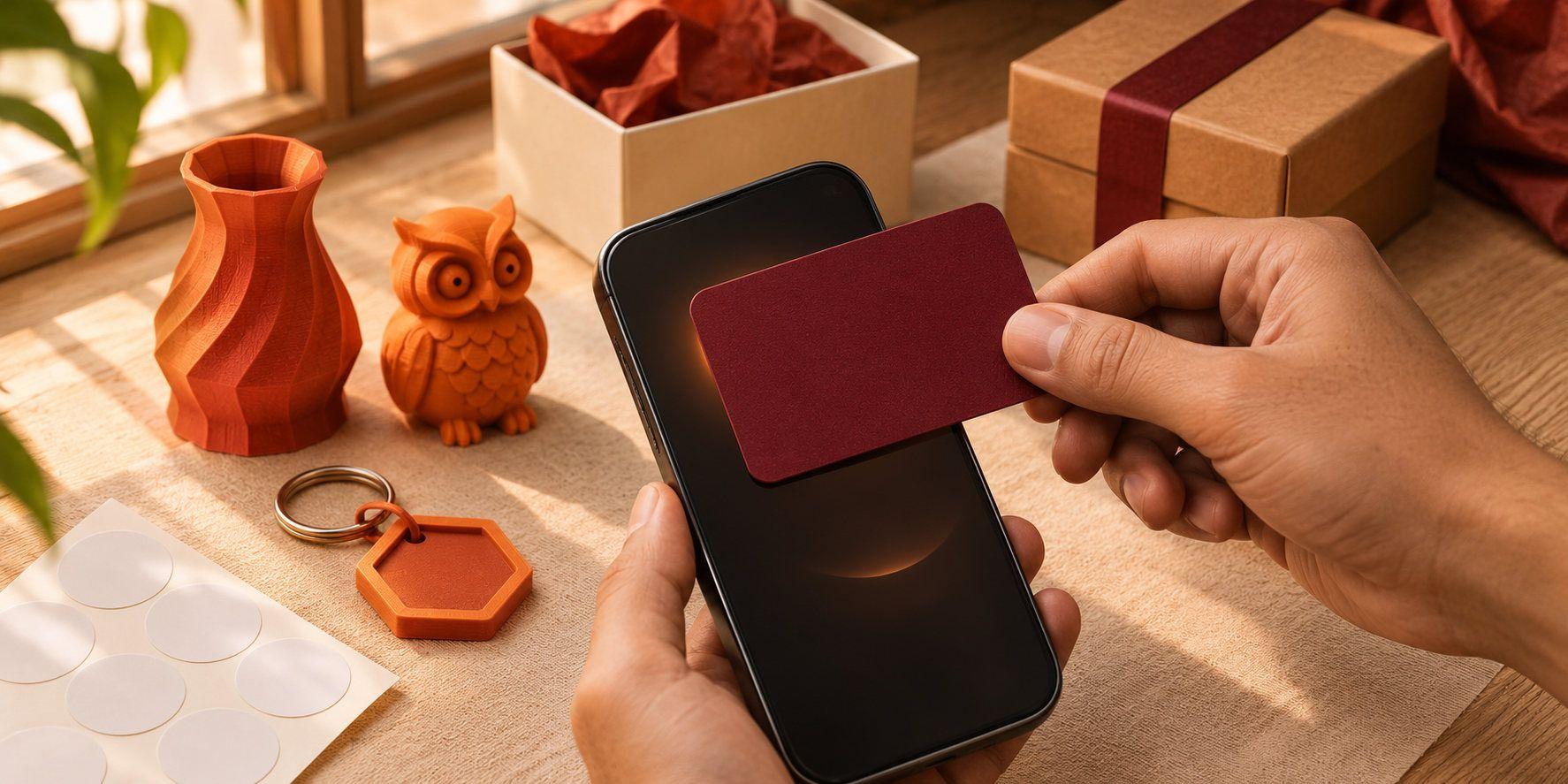
A paper card asks the person you meet to do the work: read your details, type them into their phone, hope they spelled your email right. An NFC business card skips all of that. They tap the card on their phone and your details open on the screen.
What is inside the card
Inside the card is a small NFC chip with an antenna around it. The chip has no battery. When a phone comes within a few centimetres, the phone's own NFC reader powers the chip for a moment and reads what is stored on it, usually a link.
Most modern smartphones read NFC without installing an app. On many phones NFC needs to be switched on, and on some the phone needs to be unlocked.
What the tap should open
The chip holds a link, so the card can open anything a link can:
- A digital profile page with your name, role, phone, email and socials
- A contact file the phone offers to save straight to its address book
- Your website, portfolio or booking page
- A WhatsApp chat with you
A profile page is the most flexible choice, because you can change what is on it later without reprinting the card.
Design it like a real card
People still look at the card before they tap it, so it should work as a printed card too. Keep your name and what you do readable, and add a small tap icon so people know the card does something. A printed QR code on the back is a good backup for the occasional phone without NFC.
Ordering for a team
For a team, every card can share one design while each chip opens that person's own profile. Tell us how many people, what each card should open and when you need them, and we will come back with a quote. Ask about NFC cards.